Home / Bring the supplier catalogue in without retyping it. / AliExpress import
AliExpress import
The order history that shows what you really paid.
Your supplier keeps a list price. Your real cost is that price minus the coupons and coins, plus shipping and import duty. 40thieves imports both — the catalogue and the money behind it.
A supplier account is two books: a price book and a receipt book. Most tools read only the first. The list price looks fine in a spreadsheet; the charged amount is the number your margin actually depends on. This import reads both — and keeps watching the prices afterwards, so a supplier who quietly raises a price never becomes a surprise a month later.
Two imports, one connection.
- The catalogue — Item IDs in, product out: title, variants, attributes, images and the current price. A whole list at once, and the same product imported twice is recognised rather than duplicated.
- Your purchases — Imported orders arrive with the full breakdown — list price, coupons and coins, shipping, import duty, amount charged — plus where each order stands in the eBay lifecycle.
How the fetch works, and where it stops.
First the supplier is asked directly, because it is faster and steadier. Where it cannot answer for an item, a fallback reads the product page instead. Both paths land in the same clean shape, so nothing downstream cares which one was used.
Where the supplier asks for a captcha, the job stops and reports it. No partial product, no silent skipping — an import you believe succeeded and did not is worse than one that failed in front of you.
We refresh prices twice a day, morning and evening in Europe/Berlin. A supplier price that changed overnight is in the system by the time you sit down.
What the import feeds.
- Matching — 40thieves matches imported products and eBay listings by exact article number first, then by meaning across languages — and keeps your corrections.
- Pricing — The paid cost — not the list price — becomes the basis of every margin calculation and price recommendation.
- Clustering — Several purchases of the same article become one article, so a size or colour does not masquerade as four separate products.
- Images — The imported images go straight into preparation: deduplicated, classified, cleaned and composed.
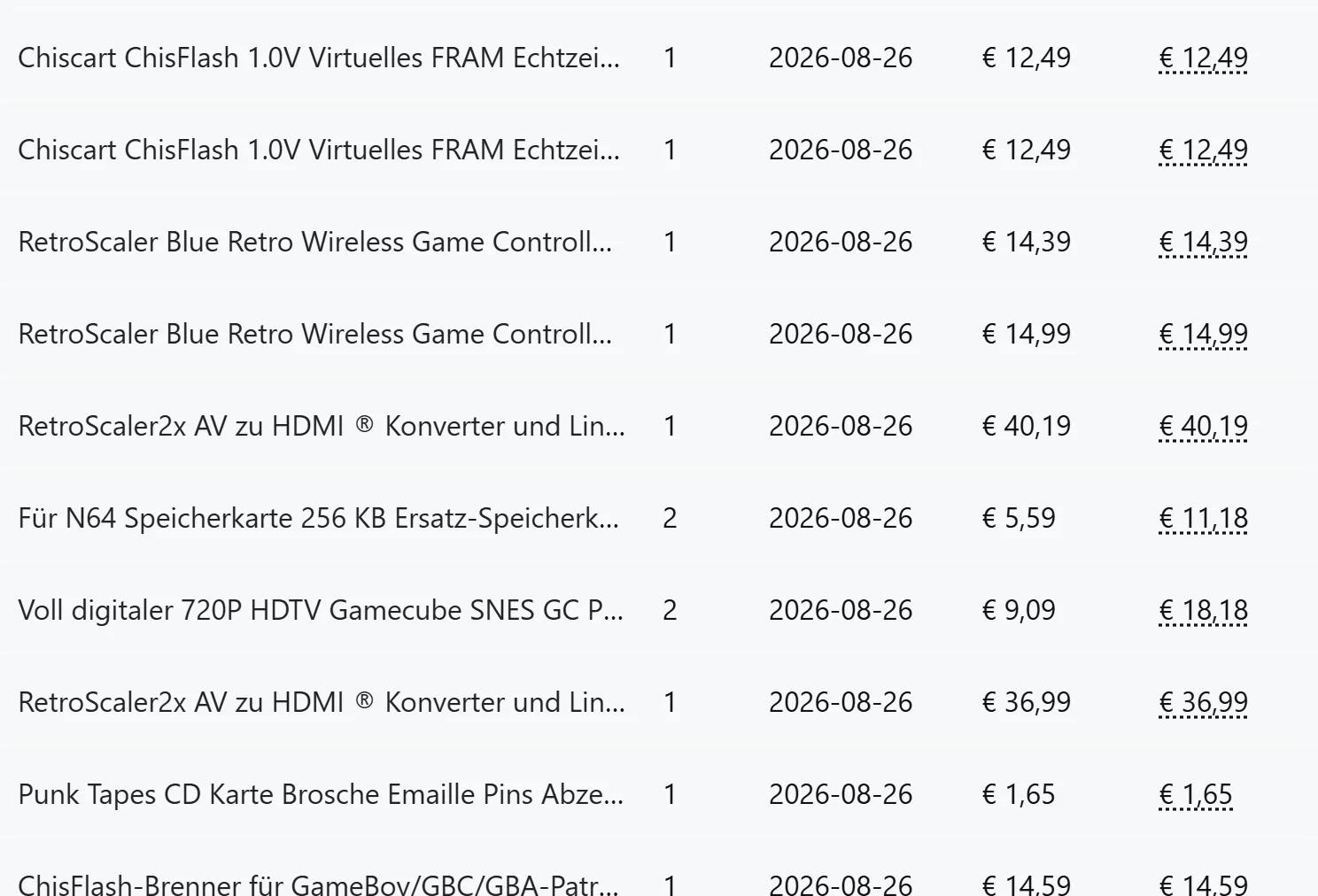
Orders in, costs out.
The imported orders at the end of the sourcing flow, with the status the supplier reports. This is the figure that becomes the cost basis of a listing.
Questions, answered
Does it need my AliExpress account?
The connection is authorised once and used for both the catalogue and your purchases. Your own purchase history is what makes the true-cost side work — without it you get list prices, which is the number that lies.
What if a product is removed at the supplier?
The last imported version stays in your catalogue with its price history. What it will not do is pretend the product is still available.
How large can an import be?
The import itself takes as many item IDs as you give it. What is capped is the work behind it: the listing, image and draft steps take fifty items at a time, so one failure costs you fifty rather than the whole batch.
Are shipping and import duty included in the cost?
Yes, on imported orders: the breakdown runs through shipping and import duty to the amount actually charged. That figure is what your margin is measured against from then on.
Go deeper
- Sourcing — Why the cost side of a supplier matters more than the catalogue side.
- Product import by URL or item ID — The other two ways a product comes in — a product page, or a listing from another seller.
- Price intelligence — What happens to the real cost once it is in the system.
Back to sourcing
Import one order history and see the difference.
List price against charged amount, side by side. It changes how you read the next price you are quoted.
Get Started